
AI-generated content has become a normal part of writing online. Tools such as ChatGPT, Gemini, Claude, and other AI writing assistants can produce articles, emails, essays, product descriptions, and social media posts within seconds.
But there is one problem many users encounter: AI-generated content can be detected by AI detectors.
You may write an article with an AI tool, check it with an AI detector, and receive a result claiming that a significant portion of the text was likely generated by artificial intelligence.
So, why does this happen?
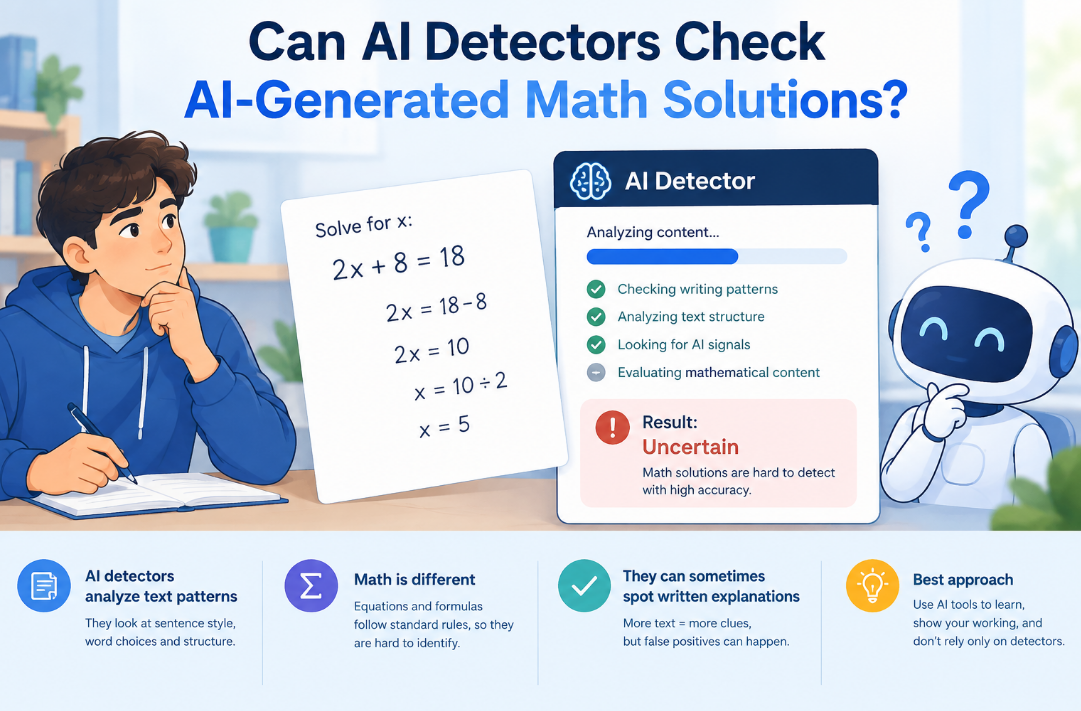
AI detectors don't simply look for specific words that ChatGPT uses. Instead, they analyze patterns in the writing. These patterns can include how predictable the words are, how sentences are structured, how vocabulary is used, and how consistently the text follows certain linguistic patterns.
Understanding these signals can help explain why AI-generated content is sometimes easier for detection systems to identify.
What Is AI Content Detection?
AI content detection is the process of analyzing written text to estimate whether it was produced by a human or an AI system.
AI detectors use statistical and linguistic signals to make this prediction. Different detection tools use different models and methods, so their results can vary considerably.
For example, one detector might classify a paragraph as mostly human-written while another might assign it a high probability of being AI-generated.
This is important because an AI detection score is not the same as proof of authorship.
Most AI detector are making a prediction based on patterns in the text rather than identifying a hidden label inside the content.
Why Does AI-Generated Content Get Detected?
There isn't one single reason AI-generated content gets detected. Several characteristics can make AI-written text appear statistically different from typical human writing.
1. AI Writing Can Be Highly Predictable
One of the biggest signals used in AI text analysis is predictability.
When an AI model generates a sentence, it selects words based on probabilities learned from huge amounts of training data. It generally chooses words that are statistically appropriate for the surrounding context.
For example, if a sentence begins with:
"There are several important benefits of..."
the next words are relatively predictable.
AI-generated writing often maintains this type of predictable structure throughout an article.
Human writers, on the other hand, are less consistent. They may suddenly use an unusual phrase, change sentence length, introduce an unexpected example, or express an idea in a less conventional way.
These variations can make human writing statistically less predictable.
2. Repetitive Sentence Structures
AI-generated content can sometimes follow similar sentence structures repeatedly.
You might notice patterns such as:
"One of the most important..."
"Another key benefit..."
"It is important to understand..."
"In today's digital world..."
"By following these steps..."
None of these phrases are inherently AI-generated. Humans use them too.
The problem occurs when similar structures appear repeatedly across a long piece of content.
AI detectors can analyze these patterns and use them as one signal when estimating whether text was generated by AI.
3. Consistent Writing Patterns
Human writing naturally contains variation.
A person might write one short sentence followed by a long sentence. They might use slang in one paragraph, a technical expression in another, and a completely different writing rhythm later.
AI-generated content can sometimes be more consistent.
The vocabulary, sentence construction, punctuation, and overall tone may remain unusually stable throughout an article.
This consistency can become a detectable characteristic.
4. Unusual Levels of Perplexity
You may have heard the term perplexity when researching AI detection.
In simple terms, perplexity is related to how predictable the next word in a piece of text is.
Text with lower perplexity tends to follow more predictable word choices and sentence patterns.
AI language models are designed to generate coherent and statistically likely sequences of words. As a result, some AI-generated text can have patterns of predictability that detection systems may identify.
However, perplexity alone cannot reliably determine whether something was written by AI.
Human writing can also have low perplexity, particularly when the writer is producing formal, technical, or highly structured content.
5. Limited Variation in Sentence Length
Humans don't always write with perfect consistency.
A person might write:
"AI detection is complicated."
Then follow it with a much longer explanation containing several clauses and examples.
AI-generated content can sometimes produce a more consistent rhythm.
If an article contains many sentences of similar length and structure, it may appear more algorithmically generated.
This is one reason variation in sentence length and structure is an important characteristic of natural writing.
6. Generic or Overused Language
AI systems are particularly good at producing broadly applicable explanations.
That can also become a weakness.
AI-generated articles sometimes contain phrases such as:
"In today's rapidly evolving world"
"It is important to note"
"Whether you're a beginner or an expert"
"There are several factors to consider"
"Let's take a closer look"
These expressions aren't proof that content was written by AI.
However, when generic phrases appear frequently alongside other predictable patterns, they can contribute to an AI detector's overall prediction.
7. Lack of Personal Experience
Another difference between human and AI writing can be the presence of genuine personal experience.
A human writer may naturally include details such as what they personally observed, what happened during an experiment, what went wrong, or what they learned from a particular situation.
AI doesn't have personal experiences in the human sense.
When content consists primarily of generalized explanations without specific observations, examples, or original perspectives, it can sometimes resemble typical AI-generated writing.
This doesn't mean every informative article needs personal stories. It simply explains why original experience can make writing more distinctive.
Do AI Detectors Actually Know That AI Wrote the Content?
Not exactly.
This is one of the most important things to understand about AI detection.
An AI detector generally doesn't have access to a secret database that tells it, "ChatGPT wrote this paragraph."
Instead, it analyzes characteristics of the text and calculates a probability or classification.
For example, a detector might determine that a particular passage has patterns that are more commonly associated with AI-generated writing.
That is fundamentally different from proving who wrote the content.
Because of this, false positives can happen.
A completely human-written article can sometimes receive an AI-generated classification, especially when it is highly formal, grammatically consistent, short, or written in a predictable style.
Why Can Human-Written Content Be Flagged as AI?
AI detection isn't perfect.
A human writer who follows a formal academic writing style may naturally produce text with predictable vocabulary and sentence structures.
Consider a scientific paper.
Scientific writing often avoids slang, follows strict structures, uses specialized terminology, and maintains a consistent tone. Those characteristics can potentially overlap with patterns found in AI-generated writing.
The same can happen with:
Academic essays
Technical documentation
Legal writing
Business reports
Product descriptions
Formal educational content
This is why an AI detector's result should generally be treated as an estimate rather than definitive evidence.
Does Editing AI Content Change Its Detection Score?
Yes, editing can change how a detector evaluates content.
When someone substantially rewrites AI-generated text, the resulting content may have different vocabulary, sentence structures, rhythm, and stylistic patterns.
Even relatively simple changes can alter the statistical characteristics of a passage.
However, there is no universal editing technique that guarantees a particular AI detection result.
Different detectors use different systems, and detection models are continuously changing.
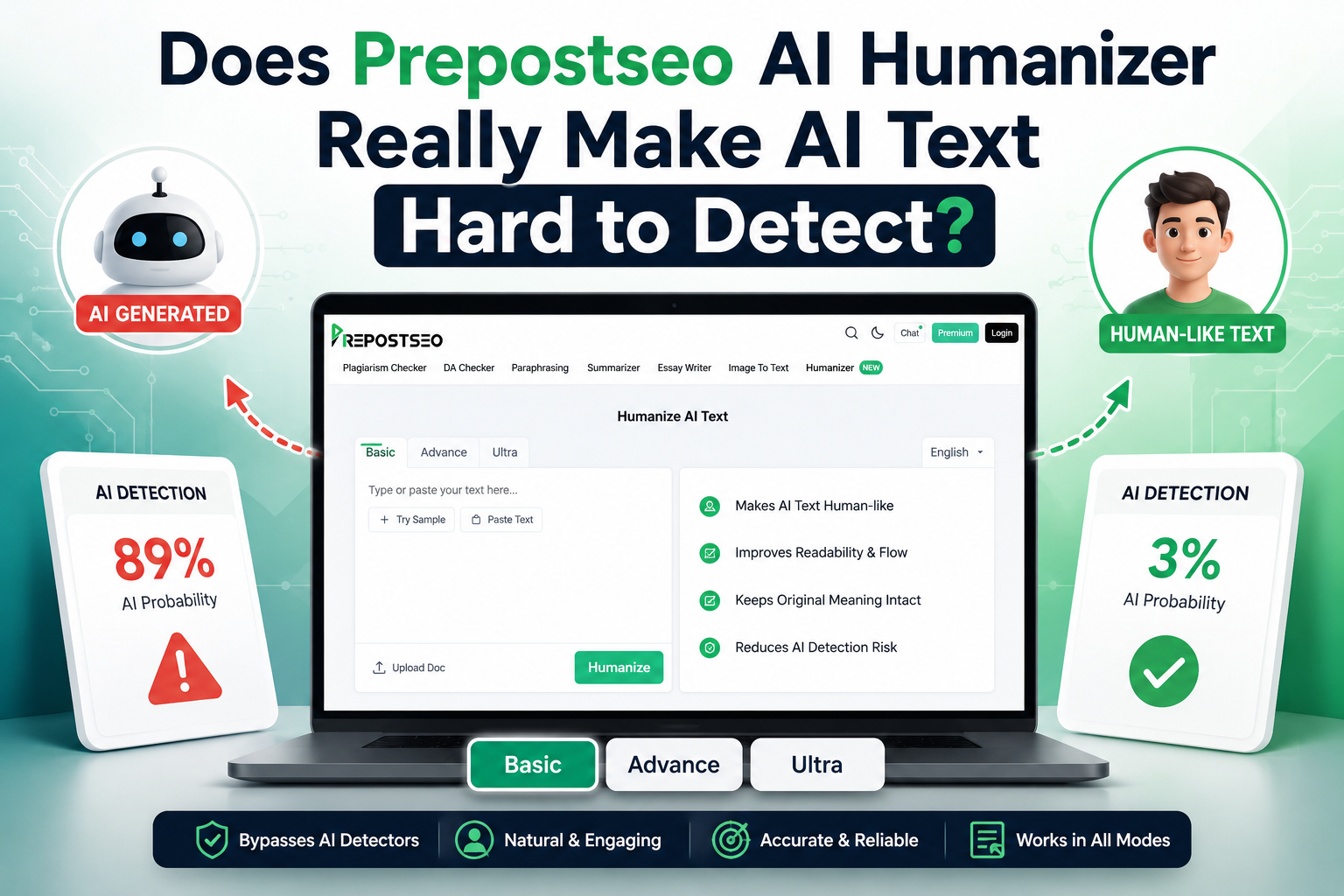
For writers who want to make AI-assisted drafts sound more natural, an AI humanizer can also be used as part of the editing process. These tools are designed to transform overly predictable AI-style writing into text with more varied sentence structures, vocabulary, and natural writing patterns.
The important part is still the quality of the final content. Editing should improve readability, originality, and usefulness rather than simply targeting a particular detector score.
Can AI-Generated Content Be Completely Undetectable?
There is no reliable guarantee that AI-generated content will always be undetectable.
AI detectors change over time, and different detection systems can produce different results from the same text.
A piece of content that receives a low AI probability from one detector could receive a higher score from another.
Likewise, future versions of detection systems may evaluate the same writing differently.
Instead of focusing exclusively on whether content can "beat" an AI detector, writers should focus on producing content that is genuinely useful, accurate, original, and appropriate for its audience.
How to Make AI-Assisted Content More Natural
If AI is used as part of the writing process, the best approach is to treat its output as a starting point rather than a finished article.
Here are some useful practices:
Add Original Information
Include facts, examples, observations, case studies, or experiences that aren't simply generic explanations.If you're using an AI book writer to create an initial draft, don't publish the first AI-generated version. Review the content, add your own ideas, and rewrite it in your own style so the final work reflects your intended voice.
Rewrite in Your Own Style
Don't publish the first AI-generated draft. Change the wording, sentence structures, organization, and tone so that the final article reflects your intended voice.
Remove Unnecessary Filler
AI-generated content can sometimes use extra words to explain relatively simple ideas. Removing unnecessary introductions and repetitive statements can make an article more direct.
Use Specific Examples
Specific examples make content more useful and distinctive.
Instead of saying that something is "very important," explain exactly why it matters and show the reader a realistic example.
Fact-Check the Information
AI models can produce inaccurate or outdated information. Always verify important claims before publishing.
Edit for Humans, Not Just Detectors
The ultimate goal should be good writing.
A piece of content shouldn't be considered successful simply because an AI detector gives it a particular score. It should be clear, accurate, engaging, and genuinely useful to the person reading it.
AI Detection Is More Complicated Than a Simple Score
AI detection has become an important part of the modern content ecosystem, but it is not a perfect science.
AI detectors analyze patterns such as predictability, sentence structure, vocabulary, repetition, and other linguistic characteristics to estimate whether text resembles AI-generated writing.
At the same time, human writing can naturally contain many of the same characteristics.
That's why AI detection results should be interpreted carefully.
As AI writing tools become more sophisticated, detection technology will continue to evolve as well. The relationship between AI generation, human editing, and AI detection is likely to become increasingly complex.
For writers, the most reliable strategy is not simply to chase a detection score. Instead, use AI responsibly, add genuine human input, verify information, and make the final content useful and original.
Frequently Asked Questions
Why is my AI-generated content getting detected?
AI-generated content can be detected because it may contain predictable word choices, repetitive sentence structures, consistent vocabulary, and other statistical patterns associated with AI-generated text.
Can ChatGPT content be detected?
Yes. Some AI detectors are designed to estimate whether text resembles content generated by models such as ChatGPT. However, detection results are not guaranteed to be accurate and can vary between tools.
Can human-written content be detected as AI?
Yes. AI detectors can produce false positives. Formal, highly structured, or predictable human writing can sometimes resemble AI-generated text.
Does paraphrasing remove AI detection?
Paraphrasing can change the characteristics of text and therefore may affect an AI detector's result. However, there is no guarantee that paraphrased content will receive a particular detection score.
Are AI detectors 100% accurate?
No. AI detectors are probabilistic systems and can produce both false positives and false negatives. Their results should be treated as an indication rather than definitive proof of AI authorship.
Should I avoid using AI for writing?
Not necessarily. AI can be a useful writing and research assistant. The key is to review, fact-check, edit, and add meaningful human input before publishing the final content.
Final Thoughts
AI-generated content gets detected because AI writing can exhibit statistical and linguistic patterns that differ from the variation commonly found in human writing.
Predictable word choices, repetitive structures, consistent sentence patterns, generic language, and other characteristics can contribute to an AI detector's prediction.
But detection is not perfect. Human writing can also trigger AI detectors, and different detection tools can produce completely different results.
As AI becomes a bigger part of content creation, understanding these limitations is just as important as understanding how AI detection works.
The best content ultimately goes beyond a detector score. It provides original ideas, useful information, accurate facts, and a genuine reason for the reader to keep reading.